


Producer of the Year Isn't Always a Celebration
Lauren from Bundarra Farm just won Delicious Magazine's Producer of the Year and sat down with Rachel to tell us what that really means.
Lauren from Bundarra Farm just won Delicious Magazine's Producer of the Year award. It's the kind of headline that should come with confetti. But sit down with her, and the story gets a lot more honest, and a lot more human.
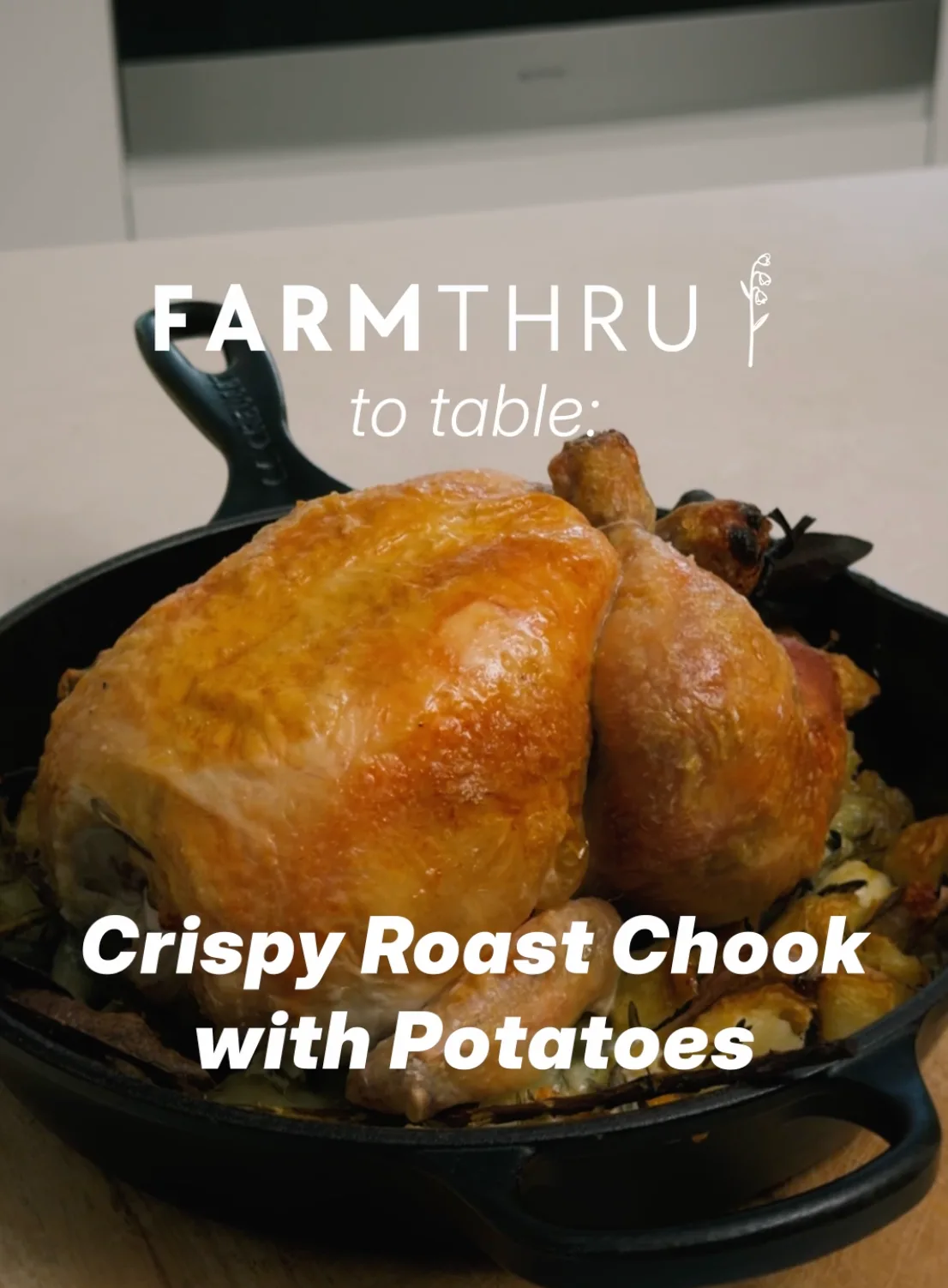
We sat down with Lauren after the win to hear the real story behind it. It starts with a chicken. Frustrated by the fertility and continuity issues she kept running into with existing breeds, Lauren teamed up with her collaborator Adrian to develop something better from the ground up, Bundarra Pasture Chickens, bred with the kind of care for flavour and quality that gets lost when an industry is chasing yield alone.
Then there's the butchery. After one too many run-ins with abattoir waitlists, no-notice cancellations, and minimum-run requirements that just don't work for a small operation, Lauren built her own - a small, licensed facility that let her take back control of her production. And true to who she is, she didn't keep it to herself. It's become something of a lifeline for other local farmers in the same boat, a facility she happily shares because she sees it as an enabler for the whole community, not just her own farm.
Rachel caught up with Lauren to talk through all of it, the chickens, the butchery, the award, and the honest reality of what quality food actually costs the people who grow it. Lauren was candid about the burnout, the financial pressure of running a small, high-touch model with none of the automation that makes bigger operations easier — and what she thinks needs to change, whether that's collaboration, share farming, or finding the right partner to help her scale sustainably.
What comes through more than anything is that Lauren isn't going anywhere. Despite the hard year, her love for growing good food and feeding people hasn't budged an inch. It's exactly why platforms like FarmThru exist, to help farmers like Lauren reach the people who want to support the way she farms, and to help all of us shift our habits toward food worth choosing.
Transcript57 passages
Just go through the process of how that happened. So Brigitte down at Tadesca, she's got a restaurant down in Red Hill, and she has been using our pork and chicken for a while. And I she was using the Summerlands and we had real trouble with the just the continuity of product and they're not very fertile. They just stopped laying over winter.
And we were just banging our heads together until we did this class. And I said, oh, would you like to try one of these new chickens? And she goes, like, I'll try anything that you grow. So Mhmm. Yeah. And she just thinks they're the best chicken she's ever tasted, which is so gratifying for both ages. Because Adrian does the breeding and hatching.
And and so she nominated us and and I just thought we were getting this chicken award. And when all the other awards got read out and ours hadn't yet been announced, I was like, oh my you know, I was mortified. Like, I hadn't prepared anything. And then when I called out producer of the year, I was just like, oh my good.
Of Absolutely the so. You should. Don't really whole new breed of chicken, really. I mean, it's just it's just mucking around with flavors and how they adapt to the environment and I just find that, you know, Australia misses out on some really good produce, I think, because we're I think Australia is still pretty focused on yield and well, the commercial chicken industry is very much about yield and efficiencies. And Yeah. I just find it kind of a soulless space to work in. I don't necessarily like the flavor of the broiler chickens. And I just found there's a space there to improve, you know, the culture around chicken meat and Yeah.
And also people just getting their head around what the cost of actually raising a chicken, the true cost of raising a chicken. Sure. I mean, I'm experiencing it with Joe at the moment. He just goes, I've already spent $30, you know, raising this chicken. You know? I'm gonna have nothing unless I charge $40, and people then go, what?
$40 a chicken? Exactly. Because it's not automated. Nothing's automated. We don't have economies of scale with small scale farming and, you know, environment happens, shit happens, life happens. And Yeah. We're not in these controlled environments. And, you know, there's a there is a place for free range regenerative birds at each level, I think. And there's a space for free range broiler birds, and there's a space for, you know, the for medium range birds, and there's a space for, like, these premium birds and this For the chicken connoisseurs out there. Yes. That's right. And I think that we don't have a really and, like, unless you had chickens at home and you're, like, knocking knocking one on the head and and eating that. I remember doing that with mom and mom when we were kids, like, I was always in the chook pen as kids. Like, one of my earliest memories is being chased by this bloody rooster that we had and was I only yay high because the rooster was in my face. And I remember just running, just being terrified, and that's always been this memory in the back of my head.
So it's kinda funny that I farm chicken. Little did you know you were gonna be start inventing your own chickens. I know. But it's been this idea for a long time of just not being satisfied or just seeing that the space there for something could be better or, you know, that chefs can really get into. But then people at home can also cook something that's next level and of of a heritage sort of genetics, but something that fits with our, you know, our environment is Yeah.
Is really What do you call them? We just call them Bundarra pasture chickens because, you know Right. That's a name that's gonna stick. Yeah. The genetics behind it are too hard to put into one. Right. Right. I think for us, it's just a little love project that's kinda going quite well. And now we just need to be able to scale it to a point where we've got continuity of customers and then but also it it gives Adrian the sort of the validation to keep hatching.
And it's it's five months Mhmm. By the time he hatches an egg until he can get a chicken. Yeah. That's way longer than a traditional boiler bird. Yeah. I mean, a traditional boiler bird's five to eight weeks, really. I'm not sure about in a free range environment, but, you know, it's something that I did toss around with about doing a boiler bird regeneratively.
And we still could do that if depending on what happens in the next twelve months, like, whether we can raise some funds to do some breeding facilities or or not. And it depends, like, what our local abattoir does as well. I mean, this morning, we don't have a big producer using the abattoir anymore. So we didn't really get any notice to say that we had to have a 150 birds in a run minimum to use it now that the big producers pulled out and oh, god. It's just like Yeah.
Yeah. Well, it's every independent producer's nightmare. The abattoir situation of which you know very well and are right onto. I know. We built this one locally to prevent this from happening. And so this morning, they're actually doing a run for us. We only did 24 and Adrian did 10. So they're doing 34 just to get us over the line. But if we had noticed, I could've got some broiler chickens in and just to top up the kill.
So funny. My son's exactly the same. He's going in today because they're closing down the one at Crescent Head. And so he actually had to get on his hands and knees and said, please just take my my 30 chickens because I'm I cannot kill and pluck 30 chickens. And luckily, he got in, so he's running in today to do the same thing.
Yeah. But it's It's a bigger thing. Like, we have quoted up a small doing your own facility. It would not be hard. I mean, I help other people do that now. And I think just with chickens, it is one of those things that's quite quite simple to to get going. But, know, like, it's it's chicken's one of those things. Like, there's not many chicken abattoirs in Australia and quite meaning we are all at that risk. And I think, you know, it is it is a pretty simple facility to build, really.
Very. It's just and it's the it we've got an issue. We've got a new one happening where we are, and it's the council that just holding up on the waste product, you know, detail of the waste product. And then I said, I'll take some I'll take chicken waste, and then they go, oh, well, do you wanna do botulism test on your land every week or whatever?
Gosh. No, there's always something that's just making it so difficult for us independent producers to to get ahead and get a run and get a margin. Gosh. I could help with the waste side of things. I mean, that's kind of like my I love waste. Yeah. Right. I know, but it's up here. You have to come to Bellingen to get your waste.
No. Just to process it. I mean, there is options for processing it. Yes. We did get approached by ORICoop. Are you a member of ORICoop, the organic? Anyway, they're looking for someone to take on a an insect unit to for chicken feed. Oh, sorry. Adrian. So you'd be yeah. And we have a we work with a waste specialist in holding ground to to catch the abattoirs to, a, generate power, but also other options to create fertilizer, like bio fertilizers and Right.
Right. So or just even to scope something out, I'm happy to comfort you. Okay. Close the economic loop. Yes. And what about the piggies? How are the piggies going? Was that Oh my gosh. You were rewarded for those as well, I imagine. Yeah. I think it's just the work that we've done that all sort of added up into this thing that Yeah. People thought was alright.
But they're good. They're just running around in knee high grass at the moment, and I can't keep And it's so satisfying for you to be rewarded, to be recognized more than anything, really. People actually know what you're doing, what you've done, to get where you get to where to get to where you've you've gotten. And it's, it's amazing how the everybody's aware of everybody else in this space, I think, you know.
And you can you can imagine that you're just plowing on unnoticed, unrecognized, unappreciated, but actually how great to know that, you know, those of you that are really kicking goals are being recognized. And so what does it mean to you to be rewarded with awarded with this from from Delicious Magazine? I mean, it's pretty surreal because I sort of I'm I'm kind of burnt out and and really struggling financially with the thing that I've built around me and struggle in our demographic and and community of sort of where we're situated.
And it hasn't been for the like, it has been a really hard run, and the last two years have been extremely difficult. Can you please turn it down? This is Ben, can you turn it down? We can't hear. Okay. That's alright. I can't concentrate. And so I sort of went up there going, oh, this is so odd. Like, I'm actually don't know if I can keep doing this.
And not knowing that we're gonna get this big accolade. It's it has sort of made me sit and think, is this where I'm supposed to be? When everyone tells you you're doing what you're supposed to be doing, but you're feeling like you're drowning, that's the hardest place. And so that's where I'm at at the moment. I don't I want to keep doing what I'm doing, but I can't keep doing it the way I'm doing it.
And it it is Interesting to see what an accolade like this produces, you know, what it changes, what it means actually financially, really, in the end. Yeah. That's it. And I think it is it's really hard to to convert accolades into dollars. And it's I think it's more about sharing where I'm at, which is kind of mortifying.
But I you know, if people love our food, then I need help to keep going. And maybe it's leasing land. Maybe it's not owning all the land. Maybe it's share farming, you know. I think that would be lovely to share farm with someone and add chickens and pigs to what they might already be doing even if it's like a carbon property that needs extra income. Like, there's there's so many different ways to skin a cat, isn't it? So yeah. I I don't know. I it it it's just sort of given me fresh eyes on what I've done. I can sort of sit back, but, god, I'd love a year off I know. It's just like, oh, thanks. See you. Wave the white flag.
But, no, it is a real I'm in a very precarious situation at the moment, and I'm just trying to work out how to, you know, keep Yeah. Trucking. Those awards need to come with a big pay packet. Yeah. I did get a voucher from Harvey Norman, I might get a new couch or something. But I think it would have been great. Like, I'm not complaining at all.
Like, I did not expect to win, let alone get a $5,000 from Harvey Norman. Oh, that's good. Yeah. It is cool. But I think it's more about the people I can connect to on the back of that now. So it's it's nice to be recognized that this is actually what I need to keep. So what do you need? Tell us what you need. So anybody watching watching this little interview with FarmThru here, and just to say that we are so proud to have you have you with us in FarmThru. Awesome. What do you anybody listening who hasn't who has, you know, who has a capability of helping you, what are I mean, not that we're necessarily gonna be plugged into all sorts, but I know.
I think What is the what is the ideal? Look, I think some really, it's it's almost like starting again for me. And with with knowing what I know now on on how I've built this business and then Mhmm. What it actually looks like for a small producer to be surrounded by so much infrastructure, I think that definitely needs to be a shared collaborative space now.
And it's quite crazy for one producer of my size because we haven't really grown our herd or anything for years. It's stayed quite static and that is a sustainable way for me to farm. It's it's nice. It's manageable. And I think now it's either collaboration, a massive cash injection So scale is essential, basically. At some point, we've gotta have a bit of scale.
Yeah. I mean, I need regular we have a really good online shop now, and it's great that FarmThru is building as well. And so those kind of platforms and customer bases are really valuable to me. And that is one thing that keeps me going is I just feel bad. Like, where are people gonna get their food from if we don't grow it? And I feel like we haven't really hit the scale on reaching people well. I don't spend any money on advertising or social media or anything like that. So yeah. But you're selling out. Right? I mean, you you basically have have as many customers as you can. You just have to you could probably have more if you had scale.
Yeah. I could have more and and that's around not having as much debt as I have. Like, I'm gonna be honest, I have too much debt. So selling the home farms and potentially, I don't know, maybe share farming with someone else and and not Right. You know, just letting go of that having to own everything. I think I've gone through this thing of, like, having to build, having to own things and worked really hard to build that debt.
But now it's just not sustainable. Farms are expensive, land's expensive, and I've I I love growing good food. And I know that. And I love feeding people. It's not a commodity. It's food. And I want to be able to keep doing that in some context, but the way that I've built it with the the cost of land and infrastructure is is too hard.
So I think collaboration, maybe some investment, maybe farm to share with someone would be really lovely. Yeah. Hey. If we can so I not everyone would know the scale of your operations or even on from the customer. Other farmers would understand, but customers don't really understand the supply chain and what it takes to get a quality bird, a Bundarra bird raised and then to to their their dinner table. So I I think it it would be really good to just chat through that really quick. And also Yep. You say lessons learned.
Like, you say you would approach this whole thing differently given everything that you've learned over the last, I think, twelve, twenty years twenty years on the farm? Years. Yeah. Fifteen years. Fifteen years. And I think that'd be very valuable for some people to to hear and see and and great for the average, you know, consumer to to know about. So, like, what is the infrastructure?
What does it take? How does it work? Yeah. I mean, we I just started off with one pig and no land, and I had one pig in the orchard. And then she got some friends and they were all in the orchard. We're only on a two acre block. And so then the next step was, like, Pepe calling leasing my ex husband's family farm down the road. And and so that was our concept idea of getting it ready and seeing if it would work, and then it was kind of very successful.
And we'd started a local farmer's market to test that as well, and that went well. And then we went to the Melbourne market. So there was a lot of traveling at the start, and the traveling was also getting other people to do our butchering. And because we're sort of in this little spot on the Murray River, an hour each way from big centers, there was really minimal options and workforce for people to do our own to do our butchery for us. It was kind of seemed like a competition thing.
And no one could make our small goods. It was just licensing and, you just the capacity. Not that we were big. I mean, we're only doing sort of two to four pigs a week back then. So I just started cutting them myself. I built a little butchery in our carport next to the house and got that licensed and off I went. And I had a little baby and you know, Frieda was still breastfeeding then and I'd be up all night butchering, just teaching myself how to do this work.
And then, you know, making sausages and just wanting a pure sausage, like I didn't want all the crap in it. And and so then there was so much pig that I started to cure it and, you know, turn into riettes and and beautiful things that we could eat that I couldn't find. And and so that I built that out of cash out of the business. And then and then once that got to a stage where I was just blowing out the walls, I eventually found a great bank manager that supported what I wanted to do and that we bought a shed in Barham, which is 10 k's away, and retrofitted it into a facility that at the time, we'd been approached by a Singapore company to export. So I was like, cool. That'd be fun. Let's go to Singapore.
And when we got back, we started building this facility. We built it to export standards. My dad and I built it just out of cool room paneling in a shed and it was awesome. And but then COVID hit and so we were stuck Got it. You know, with this facility and just hit the ground running with online orders because we already had that set up.
So that that facility costs around $500 to build. And then we did a $500,000 upgrade last in the last two years so that we could produce salami and have better efficiencies with cooking and, you know, it used to take two weeks of cooking hams and we'd only do sort of 300 hams, but it would take two to three weeks to make them because of the cycle was so small and now it's a couple of days. And so with limited staff in a regional area to do high quality goods has been really challenging and our staff, you know, like, are hanging in there, but it's, you know, it's just not we're not filling the capacity of the equipment that we bought, unfortunately. We do work with other farmers, but they're not at the scale where it's filling it up yet. So, I mean, lessons learned. I always learn the hard way and then help others not make the same, yeah, issues. But now we process between anywhere between eight and twenty pigs a week if we have the numbers. And ultimately, we'd need 20 pigs a week every week.
Yes. To make ends meet. Yeah. To make ends meet. And then yeah, you also need the workforce behind that and Yeah. We are very limited. And I'm not the best person in the butchery anymore. Like, I know that that's not my space. We have great skilled staff, but probably not enough. But then if you add another person, then you've gotta probably add more pigs.
And it's just this we're not built for the scale, and I know that now that we we need to stay small and and sustainable because I you know, it's it's we live in a really arid environment as well. If I live somewhere where there was more rainfall, it'd be probably better. We've probably had our annual rainfall this year already.
And, like, we're all in that boat. Yeah. That's lot of are in that boat. Challenging and that's the and then the infrastructure of building that. Like, that was eight years of my life volunteering to get that abattoir up and running because we're all in this crazy situation where we can't access processing and and Good Meats gonna disappear from menus if we can't get those facilities up and running. So I'm so glad that you're doing one.
I do wanna come up and have a look at that. Yeah. So that's yeah. That's tricky. And then the chickens, I mean, that's shared by Adrian. So he runs Stra Breast Chickens. He bought some genetics and license to go with that, which is quite expensive. And he's just loves birds. Like, he came to my farm wanting to learn about regenerative lamb farming and pig farming and just managing his property.
And he was just hassling me and I've just met this guy before and I was like, oh, god. I'll be at home. So he came out and I was just really busy and I'm quite a chaotic person. And so he slotted in and came and visited and I just booked him for a walk and it was it was really lovely. And I said, oh, come and see my chickens.
And he's like, have you got chickens? And I went, well, yeah. We've got these summerland's and having terrible trouble with the volumes and they get so big and he's like, oh. I see no. I said, I'd love to be able to have our own breed of chicken. And he said, I breed chick like, birds are my thing. Like, I'm a chicken breeder.
And I was like, thank you. How funny. Yeah. Yeah. And that's since over two years ago now, and and we've become really close friends and really appreciate his, you know, his input into what we're doing. And so he's going out on this limb to try and get what we need for our customers and but he hatches at home and keeps all the breeding birds and and he's quite tired as well and he's you know, we've sort of both been doing it for free for a while because we're not making enough money out of it. So for him to be able to continue, we we think that maybe I could do the brooding or eventually do the breeding and he could just help instead of having to because he's because you have to transport it.
Yeah. He's only he's got a farm close to us, but he needs the incubators at his house. Whereas, you know, perhaps that is something I could do down the track if I didn't have all this other like, the the facility overhedging and the debt overhanging me. Because it is quite hard to see the light when you are in a tricky situation where I'm at. And yeah.
Isn't that crazy? Producer of the year, and you are struggling to keep your head above water. Yeah. And which is my account. Which was exactly, you know, just, goes to share that the the whole idea of FarmThru was to try and connect these dots between people like you and people who appreciate and are going to buy this product and understand what goes into it.
That's right. Otherwise otherwise, it's a pretty bleak landscape, isn't it? Of just Yeah. High volume crap. Yes. That's right. And, you know, it's people do whinge about the cost of food, but if they actually sat down with us, like you and I, and looked at our books and went, wow. You're not actually making much money out of it, are you?
It's like, but now we've got an amazing lifestyle. Like Yes. It is I wouldn't give that up for a second. And I don't want lots of money. I just wanna be able to pay my bills and go on holiday. Yeah. You know, that's it. Raise amazing chickens. Right? Yeah. And raise amazing amazing food. Exactly. Are you proud of? Yeah. I mean, people are So it's a little bit more. All you need is a little bit more scale to fill up your capacity. Yeah. And some alleviate your overheads a bit.
Yes. So you need a you need a you need an angel somewhere to alleviate the overheads, and and you just need to slightly make a little bit more volume on what you on just the full capacity of your kitchens. You can't leave all that infrastructure behind, can you? No. That's right. It's No. It's pretty I mean, I put the mastic in between the panels. It's pretty stuck. So yeah. And it would be a shame because we do processing for other farmers here, and that's a real passion of mine is to help other farmers get their products to market because I've been there and I've seen how hard it is to get butchers to do your work. And I've always since I learned, I've always done other people's stuff for them and and love seeing other people get their product to market.
I just think it's great. And Right. I feel like we are that enabler for other local producers. And to take that infrastructure away would also be putting them in a really precarious spot, and I don't wanna do that. So Well, Lauren, you're a gem, and you raised the bar for all of us. And, you know, the work you've put into to it all and the the very fact you've got your own breed of chicken and you've overcome your issues of your environment and the nonbreeding and Yeah.
That's just I agree. That's what it takes. That's what it takes to get really good food. And god knows there's a lot of foodies out there who really appreciate it, and we hope we can help be a bit of a a bit of a a linchpin to Thank you. Yeah. Get you to get you to more of those people who love what you do. Yeah. Thank you. We certainly do.
I really appreciate FarmThru, and I just it's it's such an exciting thing, and I just yeah. I hope it just goes gangbusters from here and Yeah. Thank you. People that don't know how to access good food, and it's, like, really trying to break through people's algorithms and their daily noise is to like, this is where you can find good food. And I still have people asking, like, where do we get good beef from? I was like, call Rachel. Like, call FarmThru, you know, like, it's so I think, you know, we all need to stick together and promote Yeah.
And it's convenience and it's habit, and it's just breaking, you know, just changing habits a little bit about just going there are places now where you can access the best of the best. And we just have to make you know, just as you were saying the other day, Sean, it's not even a convenience issue anymore because everything is online, whether it be the supermarket or us. So you might as well go online to where you're gonna get the best of. And and the very fact that we're working in bulk as well means that we don't have massive overheads, so we're we're not spending the money where we don't have to. We're spending the money on the product.
Yep. Perfect. 100% supporting the farmer and getting the best product to the customer. Yeah. Alright. Thanks, guys. Thank you. I'm sorry. Alrighty. So great to see you. Well done. Hey. Thank you. Congratulations. We're we're thinking of your, of a of a little gimmick to because you've got more awards than Joaquin Phoenix, we think.
Yeah. So did he get We're trying to we're trying to find some little, anecdotes to sort of sell the best of. Cool. Yeah. Alright. They've made sure they've more awards than JoaquinPhoenix. Yeah. Yeah. Right. On a on a poster or banner somewhere in Sydney. Yeah. I'm pretty sure he's not stressing. No. He's done. Yeah. Good morning.
Not the meat eater. Maybe we better change it from Joaquin Phoenix, actually. That's right. Anyway Alright. Appreciate it. Good afternoon. Take care. Bye. Guys.