


Why grass fed alone isn't enough
You are what your food eats, and your beef has been eating better than you think
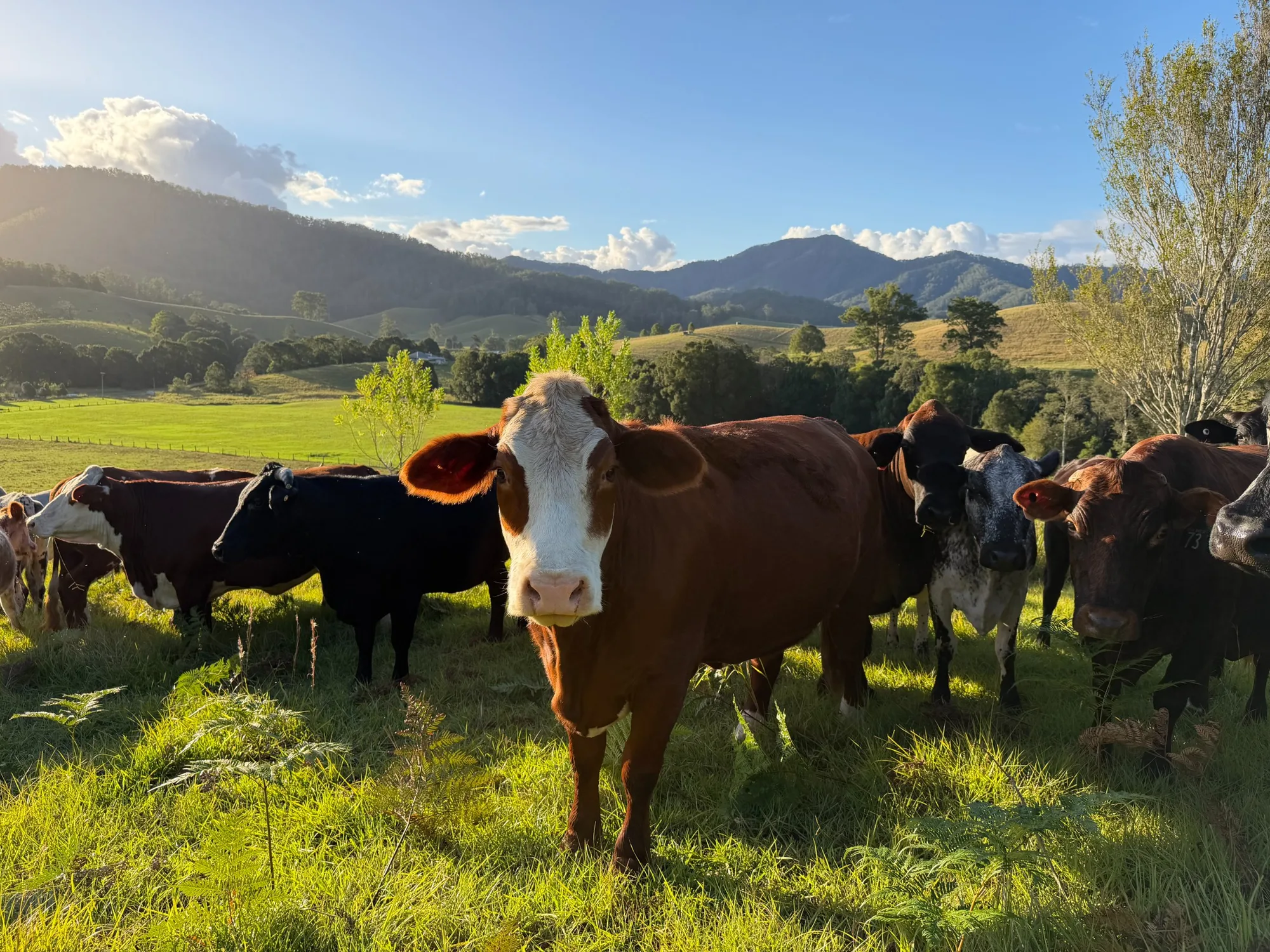
"Grass-fed" gets thrown around a lot these days. It's on packaging, on menus, on labels at the big supermarkets. But at FarmThru, it's not a sticker, it's the whole point. And the science backs us up: the nutritional gap between grass-fed and grain-fed beef is real, it's measurable, and it's bigger than most people realise.
Here's what actually changes when cattle eat what they were built to eat.
You Are What Your Food Eats
Simple idea, big consequences. Cattle grazing on diverse, living pasture take in a complex mix of plants, full of phytochemicals, antioxidants, vitamins, minerals. Cattle in a feedlot eat a fairly monotonous diet of corn and soy, bred for fast weight gain, not nutrition.
Those two paths produce two very different pieces of meat.
The Omega-3s You Didn't Know Were There
Everyone thinks fish when they think omega-3s. Turns out grass-fed beef carries 2–6× more omega-3 fatty acids than the grain-fed equivalent, along with a far healthier omega-6 to omega-3 ratio. These are fats your body can't make on its own, they matter for your heart, your brain, and keeping inflammation in check.
More Antioxidants, Naturally
Diverse pasture means more than fats. Grass-fed beef also carries:
~3× more vitamin E
~2× more beta-carotene
Roughly double the glutathione
No additives, no fortification, just what comes from an animal eating living forage instead of a feed ration.
A Better Fat Profile
Grass-fed beef tends to run leaner, but the fat it does have works harder for you: a healthier saturated fat mix, and more of the beneficial conjugated linoleic acid (CLA) that's been linked to a range of health benefits.
The Small Stuff Adds Up Too
Beyond the headline nutrients, grass-fed beef also brings higher levels of B vitamins, including up to 9× more niacin in some studies, plus more carnitine, and unique plant-derived compounds like stachydrine that simply aren't present in a grain-fed animal.
What "Grass-Fed" Actually Means (and Why the Label Matters)
Here's the part most brands don't tell you. In Australia, "grass-fed" isn't a government-regulated term. There's no law stopping a producer from finishing cattle on grain in a feedlot for up to 89 days and still calling the beef "grass-fed" on the shelf. Most of what you'll find labelled that way in supermarkets and butchers has never been through independent certification, it just spent most of its life on pasture, which is technically true while leaving out the part that matters most.
The industry does have a real standard to point to: the baseline set by the former Pasturefed Cattle Assurance System (PCAS), now carried forward under the Animal Raised Claims Framework for Beef Production Systems in Australia. Under it, a genuine pasture-fed claim means the animal was never fed separated grain or grain by-products, had continuous access to graze, and ate nothing but forage, grasses, legumes, brassicas, or pre-grain cereal crops, for its entire life. But that standard only applies to producers who choose to meet it. Nothing compels "grass-fed" on a label to mean any of it.
That last 60 to 90 days in a feedlot is exactly when an animal puts on the fat that ends up on your plate, and it's what drives every nutrient difference above. An animal finished on grain is, nutritionally, mostly the animal it was for those final months.
This is why we don't just say grass-fed. Our producers keep cattle on pasture, full stop, with no grain-finishing phase hiding at the end. It's the difference between a label that's technically true and beef that actually delivers what the label promises.
Why FarmThru Backs Pasture, Every Time
This is why we work directly with regenerative and pasture-based farms. Not because it photographs well, because nutrient-dense, honest food shouldn't be hard to find.
Better for you. Better for the animals. Better for the land.
References
Daley, C.A., Abbott, A., Doyle, P.S., Nader, G.A., Larson, S. (2010). A review of fatty acid profiles and antioxidant content in grass-fed and grain-fed beef. Nutrition Journal, 9:10.
Duckett, S.K. et al. (2009–2013 series). Research on fatty acid and antioxidant differences in grass- vs. grain-finished beef, Clemson University.
Van Vliet, S. et al. (2021). Beef Nutrient Density Project Report. Utah State University / Bionutrient Food Association, phytochemical richness (polyphenols, tocopherols, carotenoids) in grass-finished vs. grain-finished beef.
Understanding Ag (2022). Nutritional Comparisons Between Grass-Fed Beef and Conventional Grain-Fed Beef, summary of Van Vliet et al. findings on vitamin E, vitamin C, and B vitamin differences.
Journal of Animal Science (2026). Nutritional composition of beef: a comparison of commercial North American grass- and grain-finishing systems, omega-6:3 ratio and long-chain omega-3 data.
Organised (2025). Nutritional Differences: Grass-Fed vs Grain-Fed Beef, summary of CLA, vitamin K2, and beta-carotene findings, including White Oak Pastures testing data.
AUS-MEAT (2026). PCAS Information. Confirms the PCAS program ceased 1 January 2026, with its standards continuing as the baseline for grassfed claims under the Animal Raised Claims Framework for Beef Production Systems in Australia.
Cattle Council of Australia, via Sinclair + May (2018). Grass fed beef, what needs to go on your label. Source for the pasture-fed definition: no separated grain, continuous pasture access, forage-only diet.
ACCC (2021). Initial Assessment of Certification Trade Mark Application, AUS-MEAT Fodder Fed. Confirms there is currently no prescribed government standard for grass-fed or grain-fed beef claims in Australia.
The Naked Butcher (2026). Grass Fed vs Grass Finished vs Organic and what it all means. Source for the up-to-89-day grain-finishing allowance under the "grass-fed" label.
Note: nutrient differences vary by breed, pasture composition, region, and season, the figures above reflect ranges reported across the cited studies rather than a single fixed multiplier.